
Discharge Screen Printing
Soft Feel. Bold Impact. Clean Finish. Discharge Screen Printing is the go-to choice for brands that want ultra-soft, breathable prints without sacrificing vibrancy. Perfect for large-volume runs and fashion-focused collections, this technique replaces heavy ink layers with lightweight precision — creating prints that feel like part of the fabric itself. Ideal for vintage effects, muted colour palettes, and garments that demand comfort and quality in equal measure.
Fast Quote Response Free Expert Advice Get a Fast Quote Now Contact Sales

What is Discharge Screen Printing?
Discharge screen printing is a specialised printing technique that uses a water-based ink formulated with a discharge agent to remove the original dye from the fabric, rather than layering ink on top of it.
Discharge screen printing is a great printing technique if you want to produce a softer feel screen print. The discharge printing process is achieved by adding a bleaching agent into the ink which bleaches out the colour of the T-Shirt. This essentially eliminates the need for a white layer or a flash layer of ink. The same process applies whereby screens need to be created for each different colour that is in the design which is to be printed and the drying process is also the same as standard screen printing.
Why Choose Discharge Screen Printing?
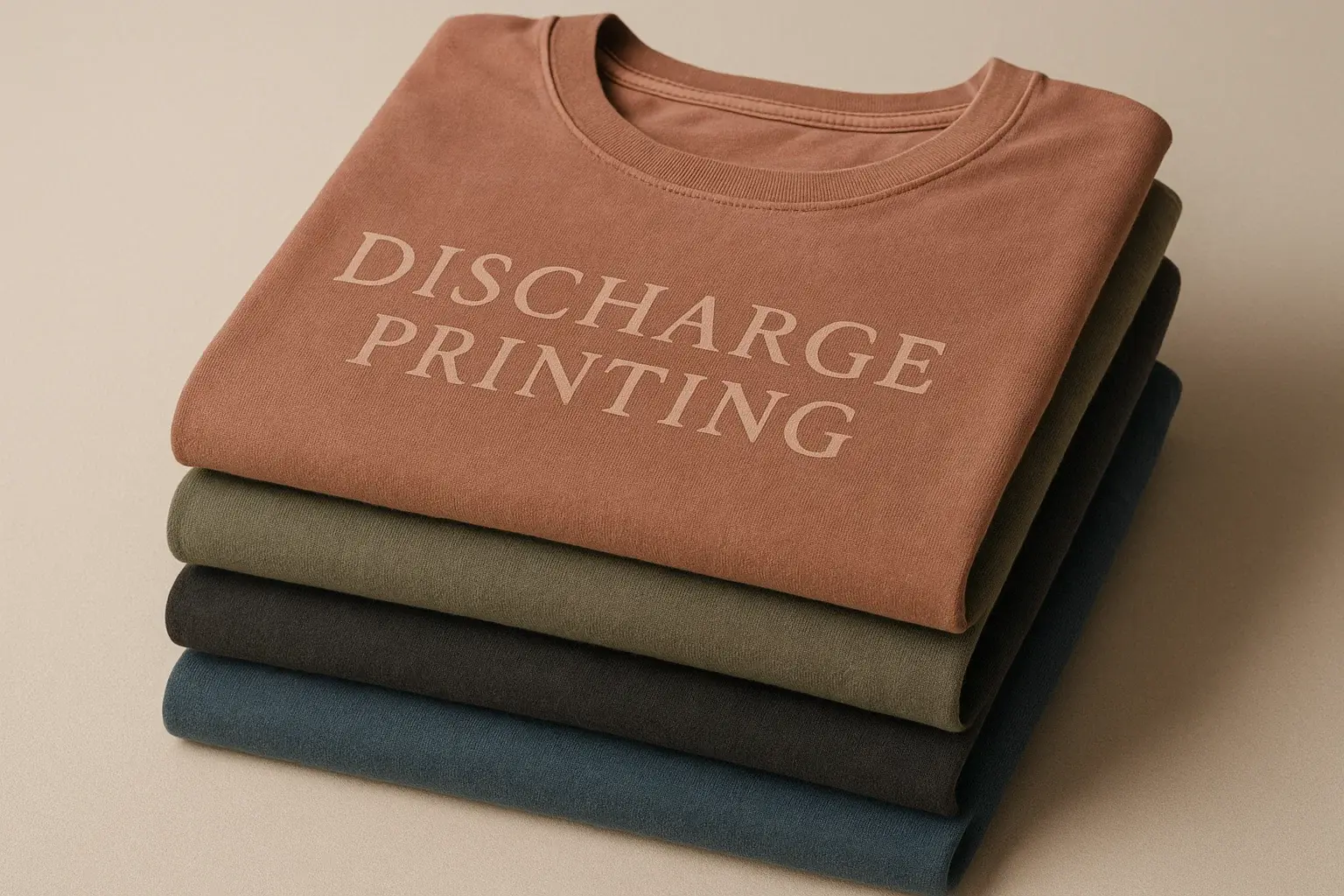
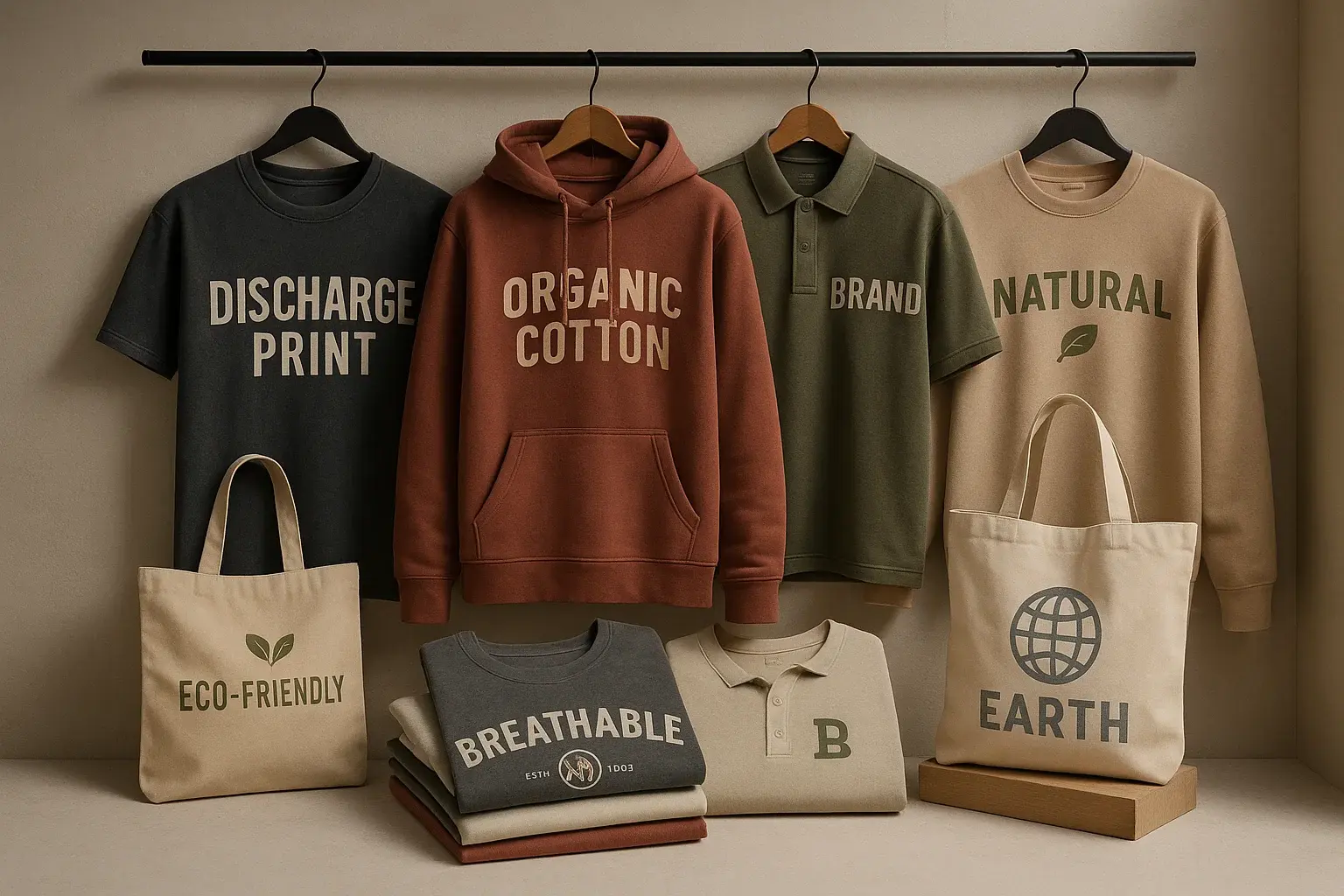
If your brand values comfort, quality, and a premium finish, discharge screen printing delivers on all fronts. This technique creates vibrant, soft-to-the-touch prints by removing the shirt’s original dye and replacing it with new pigment — meaning your design becomes part of the fabric itself. No heavy layers. No cracking over time. Just smooth, breathable artwork that customers will love to wear again and again.
For companies, this translates into long-lasting brand impact and elevated product quality. Whether you're launching a fashion line, creating staff uniforms, or offering branded merchandise, discharge printing offers a retail-ready feel that enhances perceived value. It’s especially powerful for dark, 100% cotton garments where softness matters — perfect for brands that want to impress through subtlety, comfort, and craftsmanship.

Explore Sustainable Products & Printing Techniques
Certified materials and responsible, low-impact printing options for modern brands.
Process Of Discharge Screen Printing
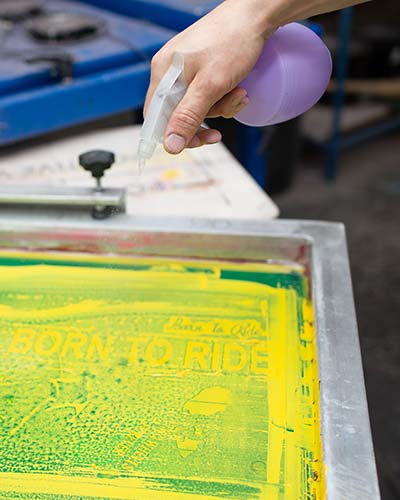
Discharge screen printing is a process where a discharge ink — typically containing an activator like zinc formaldehyde sulfoxylate — is applied to dyed fabric (usually 100% cotton). This ink bleaches out the garment’s original colour in the printed area and replaces it with the desired pigment (if coloured discharge ink is used), or leaves it in a natural off-white tone (if unpigmented).
Given that the bleaching process does not produce a perfect white base, discharge screen printing is a great option for fashion clients where Pantone colour matching is not a necessity.
This printing technique works best on 100% cotton products that do not have much red ink in them as the red can make it more challenging to get a “whiter” base for the print.
Comparing Discharge Printing vs Screen Printing Methods
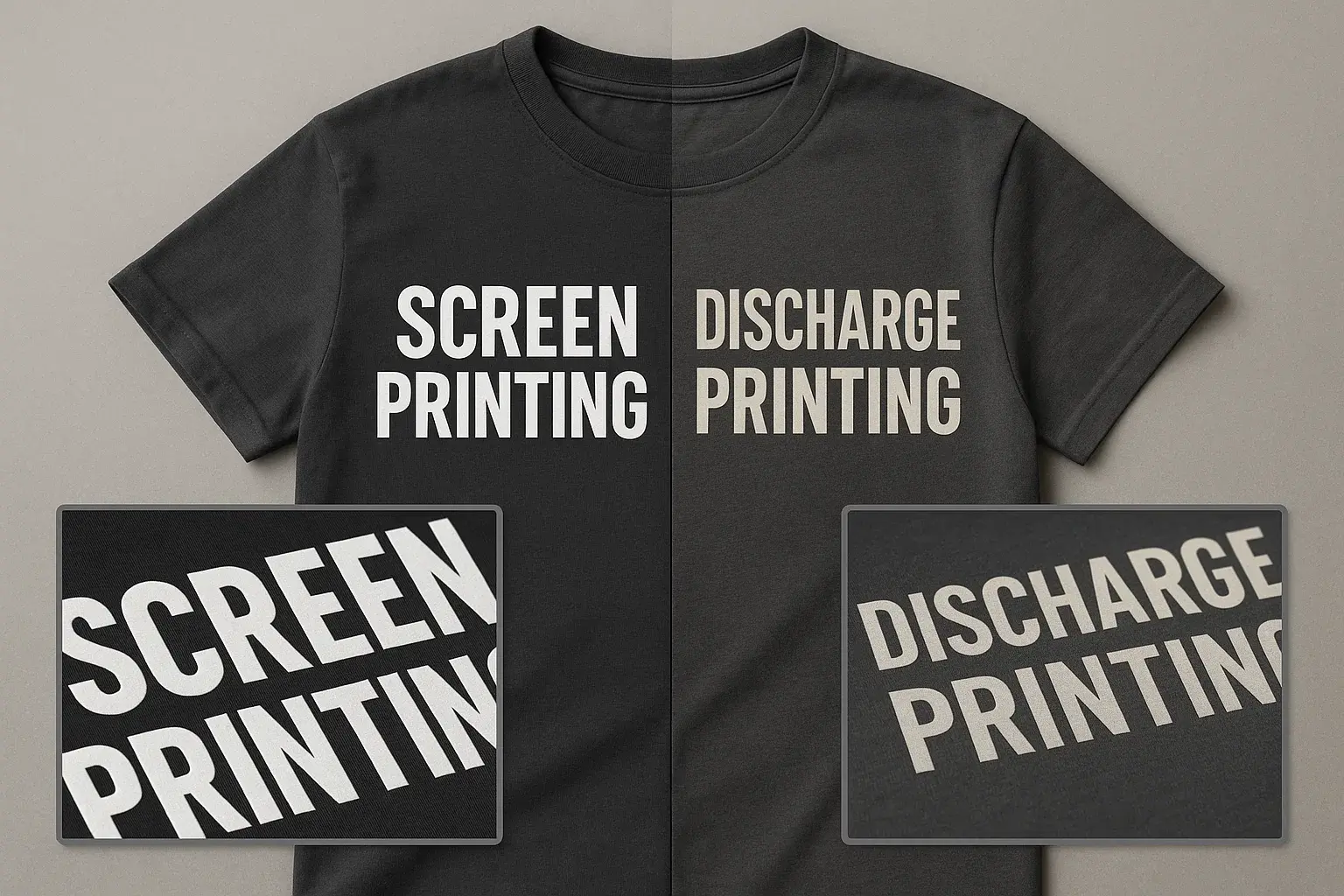
Compare discharge printing and screen printing to choose the best method for your design, fabric and order size. While discharge printing offers an ultra-soft, retail-style finish on cotton garments, screen printing delivers bold colours, consistent branding and cost efficiency for larger production runs.

Discharge Printing
Creates an ultra-soft, breathable finish by removing the garment’s original dye
Design becomes part of the fabric, with minimal surface texture
Best suited to 100% cotton or high cotton-content dark garments
Produces natural, vintage or retail-style colour effects
Highly durable with low risk of cracking or peeling
Ideal for fashion brands, band merchandise and premium apparel collections
Colour results can vary slightly depending on the garment dye
Requires testing and is less predictable than standard ink printing
Screen Printing
Applies ink on top of the fabric, creating bold and vibrant graphics
Suitable for cotton, blends and a wider range of garment types
Delivers consistent colour matching and strong brand visibility
Cost-effective for medium to large production runs
Works well for logos, uniforms, promotional clothing and event merchandise
Can produce a soft finish depending on ink type and print technique
More predictable results across repeat bulk orders
May feel slightly heavier on large solid print areas
Uses for Discharge Screen Printing
Discharge screen printing is a fantastic choice for companies and brands looking to deliver high-quality apparel with a premium, soft-touch finish — especially on dark-coloured garments.
This technique uses a water-based ink that removes the dye from the fabric and replaces it with a new colour, resulting in prints that are soft, breathable, and embedded into the fibres rather than sitting on top. It’s ideal for fashion collections, artist collaborations, sustainable streetwear, corporate uniforms, and retail merchandise, offering a vintage look, fine detailing, and enhanced comfort that won’t crack or peel over time.
Please Note
Printed garments are more sensitive and need extra attention when it comes to washing.
Advantages of Discharge Screen Printing
1. Ultra-Soft Print Feel: Unlike plastisol or other ink types that sit on top of the fabric, discharge printing embeds the ink into the fibres, resulting in a soft, smooth finish that feels like part of the garment itself — perfect for fashion-forward and comfort-driven clothing lines.
2. Excellent Breathability: Because the ink doesn’t create a thick layer, it maintains the natural breathability of the fabric. This makes it a go-to option for activewear, loungewear, and premium T-shirts.
3. Vibrant Colours on Dark Fabrics: Discharge inks strip away the original dye from dark garments and replace it with lighter pigments, allowing for bold, bright designs without a heavy print feel — ideal for modern branding and artistic visuals.
4. High Detail & Fine Lines: The thinness and absorption quality of the ink make it great for printing intricate artwork, small typography, or subtle design elements with precision.
5. Long-Lasting Quality: With no cracking or peeling over time, discharge prints are extremely durable — perfect for merchandise, uniforms, or brand apparel that needs to stand the test of time and multiple washes.
6. Eco-Friendly Options: Water-based discharge inks are generally more environmentally friendly than plastisol, aligning well with sustainable branding efforts and responsible fashion practices.
7. Premium-Looking Finish: Discharge printing gives garments a high-end, retail-quality appearance — especially valuable for brands positioning themselves as stylish, conscious, and design-led.
Disadvantages of Discharge Screen Printing
1. Limited Fabric Compatibility: Discharge printing works best on 100% cotton garments. Blended fabrics or synthetic fibres may not react properly with the discharge agents, resulting in faded or inconsistent prints — not ideal for collections that use mixed materials.
2. Inconsistent Results on Coloured Garments: Since this technique relies on removing the fabric’s dye, the end result can vary depending on how the garment was dyed originally. Some colours (like royal blue, purple, or neon tones) may resist discharge, leading to unpredictable outcomes.
3. Odour and Chemical Use: The discharge process uses activators that can produce a strong sulphur-like odour during production. While the smell dissipates after washing, it can be unpleasant during the printing process — something to consider for in-house setups.
4. Longer Production Times: Compared to standard plastisol printing, discharge requires a longer curing process and more precise conditions (e.g., exact temperature and humidity), which can slow down turnaround times — not ideal for urgent or high-volume orders.
5. Higher Costs for Small Runs: Because discharge printing requires setup with specialised inks and activators, it may not be cost-effective for short runs or one-off prints. It’s more suited to larger production volumes where the cost can be offset.
6. Limited Colour Matching: Since the base shirt colour influences the final result, it can be harder to achieve perfect Pantone matching compared to other ink methods, which may be a concern for strict brand guidelines.
7. Environmental Concerns: While discharge inks are typically water-based and more eco-friendly than plastisol, the use of formaldehyde-based activators in some formulas can raise sustainability questions unless specifically using non-toxic alternatives.
Your Order, Made Easy in 4 Steps

1. Tell us about your project needs
Share your requirements, quantities and deadlines with our team so we can recommend the best solution.
2. Expert advice & visual mock-ups
We recommend the best products and printing methods, then provide mock-ups for approval before production.
3. Production & Quality control
Your order is produced using professional printing and checked at every stage to ensure quality.
4. On-time delivery, every time
We deliver your order on time to offices, events and venues across the UK and worldwide.
Need Expert Advice?
Fill in the details below and our team will get back to you shortly.

Check Out Prices & Artwork Guidelines for our Printing Techniques
Explore printing prices and artwork guidelines — everything you need to get started with confidence, backed by expert support when you need it.
Printing Prices Artwork GuidelinesAdditional Screen Printing Techniques
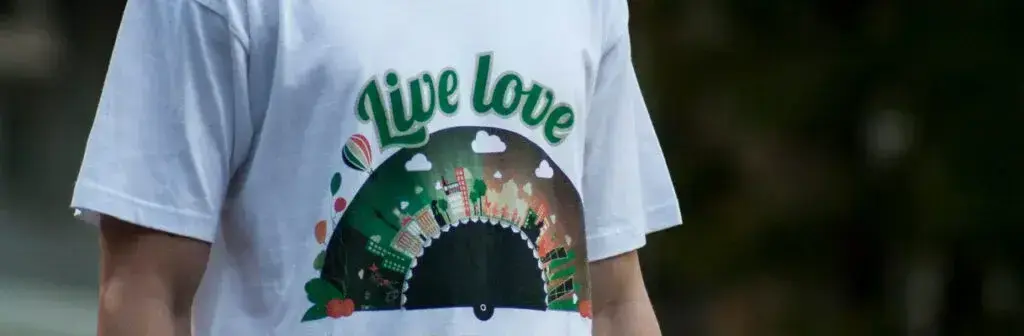
At Garment Printing, we’re passionate about offering a wide range of screen printing options to help your designs truly stand out. Whether you're aiming for high detail, a vintage vibe, or something that feels premium to the touch, our specialist methods give you the flexibility to customise your garments exactly how you envision them.




More Printing Techniques
Looking for something different? We offer a wide array of specialist printing options to bring your ideas to life. Whether you're aiming for high-impact visuals, subtle detailing, or a unique texture, our advanced techniques ensure your garments make a lasting impression. Ideal for brands, events, and individuals who want to stand out.




Frequently Asked Questions About Discharge Printing
Find quick answers to our most common questions about Discharge Printing
Discharge printing is a garment decoration technique that removes the original dye from the fabric and replaces it with new colour, creating a soft, breathable print that feels almost part of the garment itself.
Discharge printing works best on 100% cotton or high cotton-content garments, particularly dark-coloured fabrics where the dye removal process can create strong visual contrast.
One of the main advantages is the ultra-soft, lightweight feel. Because the ink penetrates the fibres rather than sitting on top, the print is barely noticeable to the touch.
Yes — discharge prints are highly durable and resistant to cracking or peeling, as the design becomes integrated into the fabric structure.
It is best suited to bold graphics, typography and solid or limited-colour artwork. Very fine details or complex multi-colour gradients may be more challenging.
Yes. It is commonly used for retail merchandise, band apparel, promotional clothing and fashion collections, making it ideal for medium to large production runs.
It is mainly used on dark garments, as the technique relies on removing existing dye. On light fabrics, the visual effect is usually minimal.
Yes — high-quality discharge inks can produce rich, natural-looking colours, although the final shade may vary slightly depending on the original garment dye.
Production timelines depend on artwork preparation, testing and order size, but once set up, discharge printing is efficient for bulk production.
Wash garments inside out at around 30°C, avoid harsh detergents and do not iron directly on the printed area to help maintain colour and softness.

Let’s Talk About Your Next Project
At Garment Printing, we support you from product selection to production and delivery. Share your requirements and timelines, and our team will guide your project from start to finish.
Get a Fast Quote